5Sixty3 Sound

Dubuque's only High Quality Car Audio and Electronics Retailer and Installation Facility

3366 Center Grove Drive - Suite 4 - Dubuque, IA 52003 563-239-1931
  • Home
  • Services
    • Car Audio
    • Custom Installation
    • Marine Audio
    • Remote Starters
    • Safety Cameras
  • Brands
    • Audio Dynamics
    • Under Construction
  • About Us
  • Location
  • Contact Us
  • Facebook

Does Preamp Voltage Matter?

Preamp VoltageFor almost as long as there have been car audio enthusiasts, they have been adding amplifiers to their vehicles to increase the power available to drive their speakers. More power means we can turn the volume up higher without distortion. When it came to connecting amplifiers to speakers, the first power boosters connected to the speaker wires of the radio. Now, modern head units offer dedicated RCA preamp outputs to make things easier.

Manufacturers specify how much voltage their source units can produce on these preamp outputs. Most radios offer at least 2 volts of signal, but some offer 4 volt, 5 volt or even 8 volts. Does this preamp voltage matter? Does more voltage make your system louder? Read on to find out.

Signal Chain

Preamp VoltageWhen we install an aftermarket radio in your dash and connect it to the amplifier, we have to make at least one adjustment to ensure everything will work properly. We refer to this step as “setting the gains.” This procedure involves matching the output voltage limit of the source unit with power production capabilities of the amplifier to ensure that both achieve maximum output when the volume is cranked all the way up.

Adjusting an amplifier’s sensitivity is, in theory, a simple process. That said, there are many things to take into consideration. How loud is the source material recorded? Does the head unit distort at full volume? Has anyone adjusted the radio’s tone controls or equalizer? Does the amplifier have any tone controls? If any one of these criteria are overlooked, the sensitivity adjustment may not be accurate.

What is the drawback to an improperly configured sensitivity control? If it is set too low, then you cannot get all the power available from the amplifier to your speakers. If the sensitivity control is set too high, then you can easily distort the output of the amplifier. A second side effect of adjusting the sensitivity control too high is that you increase the noise produced by the amplifier. Nobody wants to hear a hiss in the background of their music, so setting things properly is critical.

What Does High Preamp Voltage Do?

Preamp VoltageSome intensive research among several of us “old” car audio enthusiasts revealed that there were even a few twin-shaft cassette receivers with high-voltage preamp outputs. Some sales and marketing folks decided that more voltage meant more volume. In the early ’90s, several head unit manufacturers started marketing their radios as having high voltage preamp outputs. If nothing else changed, sure – in theory, more voltage means more output. That said, if you swap from a 2 V source unit to a 4 V, and then readjust the sensitivity control on your amplifier down to compensate for the extra voltage, the maximum output level should stay the same.

If more voltage does not make your system louder, what is the benefit of this extra voltage? The answer is a reduction in gain of the amplifier and, thus, a reduction in potential noise. If your amplifier is set up to produce full power with a 2 volt signal and has a subsequent signal to noise ratio of 85 dB, then it is not unreasonable to expect that the noise would reduce by about 3 dB when we turn the sensitivity down by the same amount.

To the Test

We set up a premium consumer-grade amplifier on the lab test bench. It had an S/N Ratio specification of 89 dB when producing 1 watt of output and connected to a 4 ohm load. This is a pretty good rating these days. We set the amp up to produce 1 volt of output with a 1 kHz sine wave at a reference level for our function generator at -30 dB relative to full signal. We then took a long frequency response measurement.

The next step was to reduce the output signal of the function generator by an arbitrary amount – we chose 6 dB. We readjusted the sensitivity control of the amplifier so the output level was once again 1 volt and took another long frequency response measurement.

The results of the two measurements are shown in Figure 1.

Preamp Voltage
Figure 1, output dropped by 6db.

In Figure 1, you can see the large spike in frequency at 1 kHz on the right side of the screen. We zoomed in to fill the screen with as much information as possible below this frequency. The gold line shows the background noise produced by the amplifier with the sensitivity control at the lower of the two settings. The green line shows the background noise when we increased the sensitivity of the amplifier by 6 dB.

Figure 2 shows the difference in noise level at 100 Hz. Not surprisingly, the difference in noise is just under 6 dB.

Preamp Voltage
Figure 2, just under 6db of noise difference.

Conclusion

When it’s time to go shopping for a new source unit, among the dozens of cool connectivity features, options for display technologies and different brand names, paying attention to specifications is still important. If you are planning to add an amplifier to your mobile electronics system, make sure your source unit can produce at least 4 volts of output on the preamps. This extra voltage will allow your installer to reduce both the sensitivity controls on your amplifier and the background noise level of the system.

Visit your local mobile electronics specialist retailer today for more information on which source units have high-voltage preamp outputs.

This article is written and produced by the team at www.BestCarAudio.com. Reproduction or use of any kind is prohibited without the express written permission of 1sixty8 media.
Filed Under: ARTICLES, Car Audio, RESOURCE LIBRARY

Product Spotlight: KICKER KMC5

KICKER KMC5

Going back a few decades, only a handful of car audio manufacturers offered marine-specific source unit options. These were often car radios with oversized front panels with waterproofing features. Now, there are dozens of companies that offer marine source units. One that stands out for its features and performance is the KICKER KMC5, which is the subject of this product spotlight. Let’s check it out!

Features of the KICKER KMC5

The KMC5 is a marine source unit with a face measuring 5.5 inches wide and 3.5 inches tall. The radio mounts through a three-inch hole, so it can replace a small round unit or a large gauge in an instrument cluster. If nothing else, drilling the mounting hole with a hole saw is much easier for your installer than cutting out a rectangle with an air saw. The radio needs about seven inches of clearance behind the mounting surface for the chassis and wire connections. The front panel is IP66 rated, so you don’t have to worry about rain or splashes causing issues. Of course, KICKER’s Real Marine rating means the radio is built with materials that won’t fade, chalk, crack, or corrode when exposed to the sun or saltwater.

The radio features a sunlight-viewable 3.5-inch full-color LCD screen that provides a clear view of what’s playing from a USB thumb drive, SiriusXM satellite radio, or the built-in AM/FM tuner. USB support is compatible with FAT32-formatted thumb drives, and media formats include MP2, MP3, WMA, WAV16, FLAC, AAC, ALAC, and M4A. You can also stream music or a service like Pandora, iHeartRadio, Spotify, or Apple Music over the Bluetooth A2DP connection. The radio includes Bluetooth AVRCP so you can control your smartphone or media player from the source unit.

While we are on the topic of audio sources, it’s worth noting that the KMC5 includes a Weatherband tuner and an auxiliary input. You can use the input with something like a TV, DVD player or media player if you have a larger boat. Speaking of video, the KMC5 has a video input that can be used with an optional backup camera. There’s an external trigger included, so the rear camera can be activated with a switch at the helm. This would be a great option for backing a boat into a narrow slip at the marina.

If you’ve looked closely at the buttons on the face, then you might have seen the Favorite option. This is a quick-access button to whatever source, radio station or weather information channel you want.

KICKER KMC5
The front panel of the KMC5 radio features a 3.5-inch color display, making it easy to see what’s playing.

System Features and Specifications

Moving on from source options, we should discuss the outputs from the radio. The KMC5 includes six channels of amplification, each rated to deliver 25 watts into a 4-ohm load and 40 watts into a 2-ohm load. You’ll notice the power wire on the amp harness is larger than the typical 14- or 16-gauge conductor you’d find on a 22-watt x 4 radio. Your installer may need to run a dedicated 10-AWG cable for power and ground to the fuse panel at your point. Hey, if you want an amp, even one in a source unit, to produce power, you need to feed it power properly.

On the preamp side, the radio includes stereo front and rear outputs, a pair of subwoofer outputs and a 2-zone RCA output. The fifth and sixth speaker output connections are assigned to the second audio zone output. So, you could power speakers beside the TV, in the galley or a berth. If you are using the preamp outputs with a separate amplifier, the second audio zone might be ideal for a set of wakeboard tower speakers. This system design would give you separate control of the zone-2 volume. In fact, you can rename this separate zone to Tower, Transom, Cockpit, or Interior in the setup menu. You can also configure the Zone-2 volume to track the main volume or be adjustable on its own.

KICKER KMC5
The KICKER KMC5 features a dedicated second output zone that can function with the master volume control or on its own.

Audio Features

The KICKER KMC5 includes an adjustable high-pass crossover for the front and rear speaker and preamp outputs. The filter can be set to 50, 80, or 120 hertz to suit the size of the speakers in the system. The radio has two tone-control options. It has conventional bass, midrange and treble adjustability, or it can be switched to Custom EQ mode. The Custom EQ includes Rock, Pop, Jazz and custom options. In the custom menu, you can boost or cut audio at 50, 125, 250, 500, 1k, 3k, and 8k Hz center frequencies to fine-tune the system.

You can expand the KICKER KMC5 with the two-inch KRC12 remote or the KRC55 Digital remote. The KRC55 includes a color display that replicates what’s shown on the main radio screen.

KICKER KMC5
The KMC5 ships with black and chrome trim rings, so your installer can match the radio’s style to the rest of the helm.

Upgrade Your Boat with the KICKER KMC5 Today!

If you are in the market for a full-featured multimedia radio for your boat, or even a side-by-side or UTV, then drop by a local authorized KICKER retailer today and ask about the KMC5 radio. You can find a KICKER dealer near you by using the locator tool on their website.

Be sure to follow KICKER on Facebook, Instagram, and YouTube to learn more about their impressive car audio, marine, motorcycle, powersport and lifestyle product offerings.

This article is written and produced by the team at www.BestCarAudio.com. Reproduction or use of any kind is prohibited without the express written permission of 1sixty8 media.
Filed Under: ARTICLES, Marine Audio, PRODUCTS, RESOURCE LIBRARY

Rear Speakers – A Benefit or a Bad Habit?

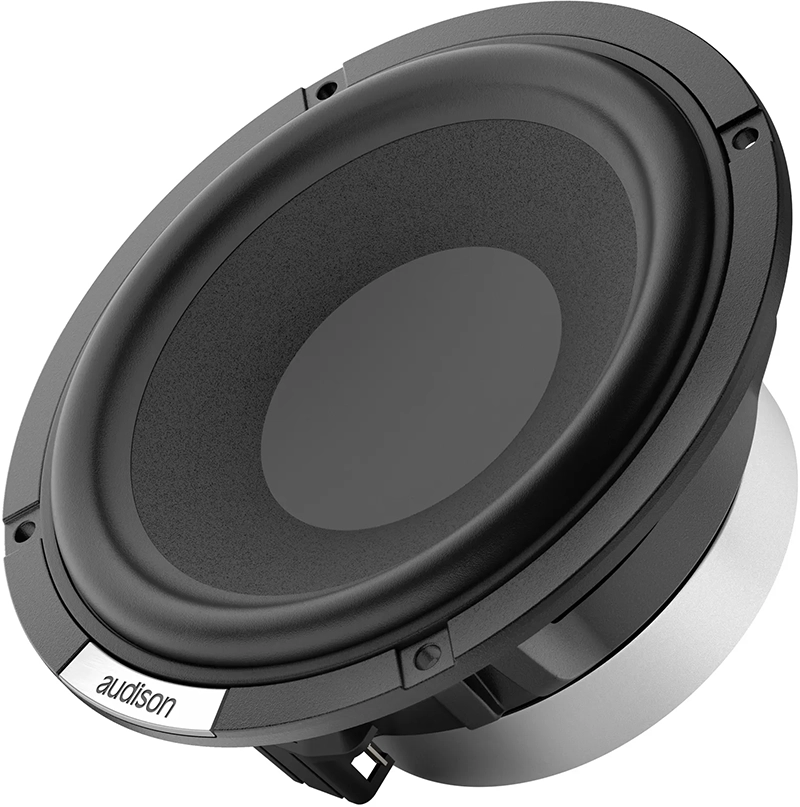
Rear SpeakersFor decades, automobile manufacturers have installed relatively large rear speakers in their vehicles. The stereotype of a set of 6×9 speakers sitting on the parcel shelf of a Monte Carlo is as “car audio” as it gets. As the industry has evolved, the importance of rear speakers has diminished. Are rear speakers necessary? Do they offer a benefit? Are we just holding on to a bad habit? Read on to explore more about rear speakers.

Why are They So Big?

Rear SpeakersAutomakers used to take advantage of the opportunity to put speakers in the rear of their vehicles because those speakers could be larger that the ones in the front of the vehicle. Consider a third-generation Camaro or Firebird. They had a set of 4×6 speakers on the dash and a set of 6×9 speakers in the rear sides. Likewise, a fourth-generation Monte Carlo had 3-1/2-inch speakers in the dash and 4×10-inch speakers on the skinny little rear deck.

In most cases, a speaker with more cone area will play louder for a given amount of power. Larger speakers are capable of producing more bass. We recently saw a factory audio system with a 9-inch door speaker, and 6x9s in a pickup truck and SUV doors are very common.

What is Our Goal?

Rear SpeakersThe trend in the last decade for both factory and aftermarket car audio systems has been to recreate a live performance as realistically as possible. This shift in design has introduced us to the need for proper speaker placement and the use of larger speakers in the front of the vehicle. The use of digital signal processors to set up crossovers, signal delay and equalization for each speaker location has further improved on our ability to create what is known as a soundstage in our vehicles.

A soundstage refers to a perceived source location for our music. In a perfect world, our music would appear to come from far out in front of us and provide a good sense of width and depth, excellent focus, and realistic ambiance – just like a live performance. Automobile manufacturers have to balance cosmetic design versus optimum speaker placement, and speaker placement often loses the fight.

What is Your Goal?

Rear SpeakersHow do you like to enjoy your music? Do you attend live performances? Do you listen to a two-channel system at home? Do you usually use headphones? Are you into surround sound? Your answers to these questions can help your car audio specialist retailer design a system that will sound the way you want.

If you like live performances and two-channel audio, then it’s most likely that you would enjoy a system with a soundstage that is out on the dash of the vehicle. In this application, rear speakers are not very important, and in most cases, the money saved by not purchasing and installing rear speakers at all will allow you to buy better front speakers.

If you listen to headphones, then you may want the sound from your system to wrap around you evenly. You may enjoy a system that makes you feel as if you are in the middle of the sound. An equal amount of sound will come from in front of you as behind you. In a system like this, using similar or even identical speakers in the front and back can help produce great results.

If you watch a lot of movies in surround sound, then you need to work with your retailer to decide what is right for you. In movies, the side and rear channels are usually reserved for special effects and ambiance. You may want to go without rear speakers in a mobile audio system. Very few sources include surround information, and currently there are no aftermarket surround sound reproduction solutions, although some are coming.

Are You a Purist?

Rear SpeakersIn pure, raw technical terms, you want as few speakers in your system as possible. Additional sources of sound can result in interference patterns called comb filtering. An ideal system would offer full-range left and right signals, and – because we typically can’t use large speakers in our doors – a subwoofer to fill in the bottom few octaves.

The placement of the speakers can have a dramatic effect on the sound of the system. From a perspective of tonal accuracy, having the midrange speakers in the doors works well. This location typically produces a very wide soundstage. A door location does not often result in a soundstage that appears to emanate from far out in front of you. To achieve that, you may need to use a smaller midrange speaker with a tweeter in a dash or A-pillar location.

When possible, try to ensure that tweeters are mounted within 20 degrees of being on-axis to the listening position.

Who’s Back There?

Another consideration for rear speakers is whether you have passengers in the rear of the vehicle. If you have children or friends in the back, then it would serve them well to have speakers to enjoy. Yes, they will be able to hear the dash or front door speakers, but not as clearly as if they had something close by. It would not be unreasonable to design an audio system that allowed you to turn the rear speakers on and off, depending on your needs.

Rear Speakers as Rear Fill

Rear SpeakersFor systems designed with a focus on the front soundstage, rear speakers are often operated at a much lower relative level than the front. Some people call this technique “rear fill.” The intent is to provide a sense of spaciousness to the listening environment. Employing rear fill speakers splits the divide between systems with or without rear speakers. The relative level of these speakers is critical. Too much can start to pull the soundstage rearward.

There is no right or wrong when it comes to a preference for the location of your soundstage. Whatever you enjoy is the right choice. Your local mobile electronics specialist retailer can work with you to design a system that sounds the way you enjoy. Drop in today and ask if they have a demo vehicle that you can audition. That’s a great way to decide what solution is best for you.

This article is written and produced by the team at www.BestCarAudio.com. Reproduction or use of any kind is prohibited without the express written permission of 1sixty8 media.
Filed Under: ARTICLES, Car Audio, RESOURCE LIBRARY

Product Spotlight: Hertz VENEZIA V8 DSPx²

Hertz VENEZIA V8 DSPx²

The Hertz VENEZIA V8 DSPx² is a marine-grade amplifier with a built-in digital signal processor (DSP) designed to power and tune an entire audio system from a single compact, marine-ready chassis. Combining eight channels of amplification with advanced signal processing, it allows a professionally designed system to deliver clean, controlled sound in boats and other harsh outdoor environments.

Modern marine audio systems face unique challenges. Wind noise, engine noise and open-air listening environments make it difficult to achieve balanced, detailed sound. A DSP amplifier like the VENEZIA V8 DSPx² allows a professional technician to precisely tune the system so music remains clear and dynamic even when conditions are less than ideal.

By combining amplification and signal processing in one product, the VENEZIA V8 DSPx² simplifies system design while providing the flexibility needed for high-performance marine audio systems.

The Technology Behind the Hertz VENEZIA V8 DSPx²

Close-up of the Hertz VENEZIA V8 DSPx² marine amplifier power and signal connections.
Close-up product details reinforce the amplifier’s purpose-built marine design and professional-grade system integration.

The defining technology in the Hertz VENEZIA V8 DSPx² is the integration of a high-performance multi-channel amplifier with advanced digital signal processing. This approach allows a professional retailer to power speakers and precisely control how audio signals behave throughout the entire system.

A digital signal processor (DSP) works by analyzing and modifying the audio signal before it reaches the speakers. In a vehicle or marine environment, speaker locations, reflective surfaces and background noise can dramatically affect how music sounds. The DSP allows technicians to correct these issues by adjusting crossover points, equalization, time alignment and output levels so the system performs as a cohesive whole.

In the VENEZIA V8 DSPx², the DSP and amplifier sections are engineered to work together from the start. This integration reduces the need for separate components and allows signal processing adjustments to directly influence amplifier output. The result is more precise control over the system’s tonal balance and dynamics, which is especially important in open-air listening environments where clarity and projection matter.

Another important advantage of this integrated design is system flexibility. An eight-channel amplifier provides multiple configuration options for powering speakers and subwoofers throughout a vessel. The DSP makes it possible to tailor each channel’s response to match the speaker type and its location within the boat, helping create a balanced listening experience across multiple seating areas.

Marine environments also place special demands on electronics. Moisture, vibration and temperature changes can affect performance and reliability. By combining signal processing and amplification within a single purpose-built marine amplifier, Hertz reduces system complexity while maintaining the durability needed for life on the water.

Key Features and Capabilities

Connection panel on the Hertz VENEZIA V8 DSPx² marine DSP amplifier.
The rear panel highlights the amplifier’s integrated connectivity for multi-channel power and advanced system control.

The Hertz VENEZIA V8 DSPx² includes a range of technologies that support high-performance marine audio systems:

  • Eight Channels of Amplification: Provides the flexibility to power multiple speaker zones or combine channels for higher output when needed.
  • Integrated Digital Signal Processor (DSP): Allows professional system tuning including equalization, crossover configuration and time alignment for improved tonal balance.
  • Marine-Grade Construction: Designed to withstand moisture, salt exposure and vibration common in marine environments.
  • Compact System Architecture: Combining amplification and DSP processing reduces the number of components required in the system.
  • System Tuning Flexibility: Multiple output channels allow retailers to create tailored listening zones throughout the vessel.

Design And Construction

Top view of the Hertz VENEZIA V8 DSPx² marine DSP amplifier.
The low-profile chassis and clean industrial design reflect the amplifier’s premium marine-focused engineering.

The VENEZIA V8 DSPx² is engineered specifically for marine use, where durability is as important as performance. Marine electronics must withstand humidity, salt exposure and vibration without compromising reliability or sound quality.

Hertz designed the amplifier with protective materials and sealing strategies that help guard sensitive circuitry from environmental exposure. These measures help maintain consistent performance in challenging conditions often encountered on the water.

Thermal management is also critical in compact marine installations. Efficient amplifier design helps control heat buildup while maintaining stable output performance, even during extended listening sessions.

The result is a component built not only for sound quality but also for long-term reliability in marine environments.

Why This Product Matters for Vehicle Audio Upgrades

The Hertz VENEZIA V8 DSPx² matters because it allows a professionally designed audio system to deliver clear, balanced sound in environments where traditional systems struggle. By combining amplification and advanced signal processing, it gives system designers the tools needed to optimize every speaker in the system.

In open-air marine environments, music can easily become thin or uneven without proper tuning. A DSP amplifier allows professionals to shape the system’s response, so vocals, instruments and bass remain balanced across different seating areas.

For listeners, the result is a more immersive and enjoyable experience. Music sounds more natural, details become easier to hear and the system performs consistently even when background noise increases.

Upgrade Your Vehicle with Help from a Professional

Achieving the best performance from a DSP amplifier requires expert system design and precise tuning. A qualified specialty retailer has the tools and experience to integrate products like the Hertz VENEZIA V8 DSPx² into a system that delivers outstanding sound.

Visit the BestCarAudio.com Dealer Locator to find a trusted professional near you. A knowledgeable retailer can recommend the right equipment, design a system tailored to your vehicle and provide the expert calibration needed to bring your music to life.

This article is written and produced by the team at www.BestCarAudio.com. Reproduction or use of any kind is prohibited without the express written permission of 1sixty8 media.
Filed Under: ARTICLES, Marine Audio, PRODUCTS, RESOURCE LIBRARY Tagged With: Hertz

What is Bluetooth?

BluetoothIf you have been around the mobile electronics industry for any amount of time, you will know that certain terms are often used incorrectly. One term that has been over-abused lately is Bluetooth. Product manufacturers, retailers and consumers have developed an expectation of what Bluetooth is, and what it does. Sadly, those expectations can lead to confusion and undesirable results. This article explains what Bluetooth is, and how it is used.

What is Bluetooth?

BluetoothBack in the dark ages, we had to connect electronic devices with wires. We also created wheels from boulders using animal bones as tools. RS-232 was a popular type of communication protocol for devices like modems, printers, scanners and cameras. Two wires would carry data between these devices and your computer. In 1994, Ericsson – a telecommunications and network equipment manufacturer in Stockholm, Sweden – introduced a wireless alternative to RS-232 called Bluetooth.

Bluetooth is a low-power, high-speed wireless communication protocol. Bluetooth operates using short-wave UHF radio waves in the frequency band of 2.4 to 2.485 GHz. Within this range of frequencies are 79 dedicated Bluetooth channels. Bluetooth uses Frequency Hopping Spread Spectrum to reduce errors and allow multiple devices to operate within the same frequency spectrum.

Bluetooth is used for short-range data communication between devices like computer and keyboards, video game controllers and consoles, and cellular phones and wireless devices. There are applications for medical applications such as monitoring heart rate, blood pressure and glucose levels. That said, many industrial applications exist between sensors in production systems and control computers.

Bluetooth Profiles

The misconception many people in the mobile electronics industry have is that Bluetooth exists to let cellular phones make calls and stream music to our radios. Bluetooth is far more involved and flexible than that.

Any talk of Bluetooth functionality is a perfect segue to introduce us to profiles. A Bluetooth profile is a set of instructions and commands that operate over a Bluetooth connection. Profiles simplify the communication between devices. In our industry, we are used to four common profiles:

PBAP – Phonebook Access Profile

HFP – Hands-free Profile

A2DP – Advanced Audio Distribution Profile

AVRCP – Audio Video Remote Control Profile

These profiles are used in varying combinations to allow you to connect your phone to your car radio so you can make phone calls and stream music. A few companies that have wanted to provide an Internet connection to their radio have used DUN to accomplish this task.

PBAP Profile

The Phone Book Access Profile allows your source unit to receive phonebook entry information, as well as manage it. Phonebook entries are transmitted and managed by the radio in vCard 2.1 or vCard .0 formats. Missed, received and dialed numbers are listed as well.

HFP Profile

The Hands-free Profile carries monaural audio between the phone and a secondary device. The profile also supports commands to answer or reject incoming calls; place a call; use memory data to place a call, terminate a call or manage phone volume level; and send phone status information, including battery, roaming status and signal strength . These functions are included in version 1.5 of the Hands-free Profile. Future versions, such as 1.7, will include support for wideband speech and the use of external audio compression and decompression codecs.

A2DP Profile

The Advanced Audio Distribution Profile operates within another profile called the Generic Audio/Video Distribution Profile (GAVDP). A2DP is responsible for allowing us to stream audio from a device such as a smartphone to a radio or powered speaker. The basic profile allows for stereo audio to be transmitted at a sampling frequency of 44.1 kHz at up to 328 kb/s. The use of a third-part codec such as aptX from Qualcomm or LDAC from Sony may further improve on bandwidth.

AVRCP Profile

Functioning alongside the GAVDP profile is the Audio Video Remote Control Profile. AVRCP is responsible for the display of song title, artist and album information, and control over playback device functions. If you can imagine a button on a DVD remote control, the AVRCP is likely to support it. Most car audio source units include functions like play, pause, fast-forward and rewind. The most recent versions of AVRCP include support for folder navigation and searching.

What Bluetooth Doesn’t Do

Although the Bluetooth Special Interest Group (SIG) works to manage the different Bluetooth communication and profile standards, there are variations in functionality between profile versions and, more importantly, between smartphone vendors. This latter fact can be a significant issue for buyers of car audio source units. The expectation that it “should work,” while not unreasonable, is not always possible. To expect a seven- or eight-year-old radio to work flawlessly with a brand-new iPhone 7 or Samsung Galaxy S8 isn’t reasonable. The hardware in the older units cannot be upgraded.

How to Buy Bluetooth

BluetoothIf you are shopping for a new source unit, take any smartphone you want to use with it to the retailer. Ask to pair your phone with the demo unit on display. Check that your entire list of phone contacts transfers as expected. Make sure you can use voice control functions if they apply to your phone. See that you can make calls easily. Finally, check that your phone reconnects reliably to the source unit by cycling power on the source a few times.

If you purchase a new radio and have it installed, only to find out it is not compatible with your smartphone, there is often nothing that can be done quickly. Some manufacturers do release updates for Bluetooth functionality, but these updates are not going to turn a Bluetooth 3.0 system into a 4.0, or add AVRCP 1.4 to a system that shipped with AVRCP 1.2. Do your research before you buy!

If you are looking for a hands-free solution to make phone calls or stream music to your audio system, drop in at your local mobile electronics specialist retailer. Bring your phone, pair the Bluetooth connection and experiment with the options.

This article is written and produced by the team at www.BestCarAudio.com. Reproduction or use of any kind is prohibited without the express written permission of 1sixty8 media.
Filed Under: ARTICLES, Car Audio, RESOURCE LIBRARY

  • 1
  • 2
  • 3
  • …
  • 12
  • Next Page »

Recent Articles

A boy covered in grease with a shocked look on his face holding 4 cables while smoke rises behind him on a blue background

Does Preamp Voltage Matter?

May 3, 2026 

For almost as long as there have been car audio enthusiasts, they have been adding amplifiers to their vehicles to increase the power available to drive their speakers. More power … [Read More...]

KICKER KMC5

Product Spotlight: KICKER KMC5

April 6, 2026 

Going back a few decades, only a handful of car audio manufacturers offered marine-specific source unit options. These were often car radios with oversized front panels with … [Read More...]

Rear Speakers

Rear Speakers – A Benefit or a Bad Habit?

April 5, 2026 

For decades, automobile manufacturers have installed relatively large rear speakers in their vehicles. The stereotype of a set of 6x9 speakers sitting on the parcel shelf of a … [Read More...]

Hertz VENEZIA V8 DSPx²

Product Spotlight: Hertz VENEZIA V8 DSPx²

March 30, 2026 

The Hertz VENEZIA V8 DSPx² is a marine-grade amplifier with a built-in digital signal processor (DSP) designed to power and tune an entire audio system from a single compact, … [Read More...]

Testimonials

Dream Center

Very happy! 4 remote starts installed in 4 hours

Friendly and knowledgeable service!

We went in not knowing where to start on our electrical issues with a new vehicle. Not only was the issue identified and fixed, but Lee explained how things worked so we could understand now and in the future. We also got two sound systems installed and could not be happier. Would recommend 5sixty3 to anyone looking for quality work to be done on a vehicle!

Ford Ranger Trim Package

Lee and his company are not something I would have ever expected to find in Dubuque. His work is top notch. His knowledge is unmatched. His professionalism is just not something you see every day. I will be back with my next project!

Now Available!

Audio Dynamics

Audio Dynamics

At 5sixty3 Sound, we’re committed to bringing you the best in car audio, and that’s why we’re proud to offer the full line of Audio Dynamics … LEARN MORE

Location


Get Directions to 5Sixty3 Sound

Find Us

5Sixty3 Sound

3366 Center Grove Drive Suite 4
Dubuque, IA 52003
563-239-1931

Connect With Us

  • Facebook

Services

  • Car Audio
  • Custom Installation
  • Marine Audio
  • Remote Starters
  • Safety Cameras

Store Hours

Monday, Tuesday, Wednesday, Thursday, Friday10:00 am – 5:00 pm

Copyright © 2026 5Sixty3 Sound · Privacy Policy · Website by 1sixty8 media · Log in

Loading Comments...